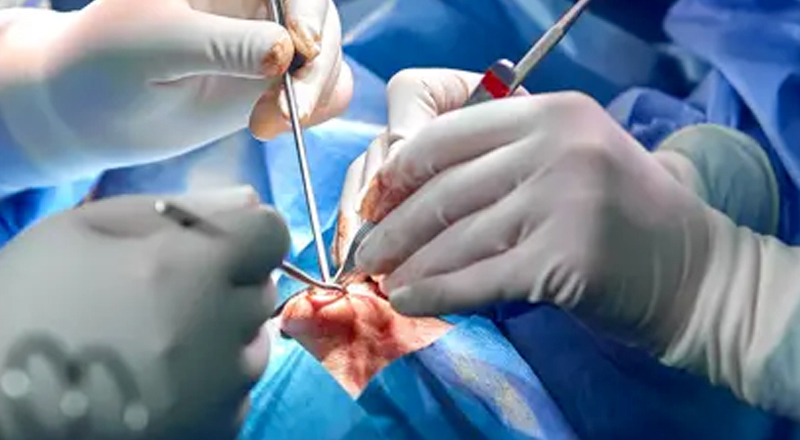
Microvascular Reconstruction Using Body Tissue (Free Flap Surgery)
Microvascular free flap surgery is the gold standard for reconstruction of large or complex head and neck defects following cancer resection. It involves transferring a segment of tissue — which may include skin, muscle, bone, or a combination — from a donor site elsewhere in the body, along with its own dedicated blood vessels, to reconstruct the surgical defect. Under high-powered magnification, the flap's blood vessels are microsurgically connected to recipient vessels in the neck to restore blood supply.
Dr. Antony Raj James has specialized training in head and neck oncology including microvascular reconstruction, with experience performing free flap surgery as part of comprehensive head and neck cancer management.
What is a Free Flap?
A free flap is a segment of tissue that is completely detached from its original blood supply at the donor site and then reattached to vessels at the recipient site using microsurgical techniques. This distinguishes free flaps from pedicled flaps, which remain attached to their original blood supply throughout transfer.
Common Free Flaps Used in Head & Neck Reconstruction
- Radial Forearm Free Flap (RFFF) – A thin, pliable fasciocutaneous flap from the forearm. Widely used for intraoral, tongue, pharyngeal, and soft tissue reconstruction requiring flexible tissue with a reliable long pedicle.
- Fibula Free Flap – Provides vascularized bone from the fibula, ideally suited for mandibular and maxillary bone reconstruction. Can be combined with a skin paddle for composite soft tissue and bone defects.
- Anterolateral Thigh Free Flap (ALT) – A versatile fasciocutaneous or musculocutaneous flap from the thigh. Suitable for large soft tissue defects and can be thinned or used with muscle as needed.
- Rectus Abdominis Free Flap – A bulky musculocutaneous flap used for large volume defects including skull base and extensive soft tissue reconstructions.
- Iliac Crest Free Flap (Deep Circumflex Iliac Artery – DCIA flap) – An alternative vascularized bone flap for jaw reconstruction in selected cases.
When is Free Flap Reconstruction Required?
Free flap reconstruction is considered when local or regional tissue is insufficient to achieve adequate reconstruction following cancer resection. Common indications include:
- Large oral cavity defects after glossectomy, floor-of-mouth, or buccal mucosa resection
- Mandibular or maxillary bone resection requiring vascularized bone replacement
- Pharyngeal reconstruction after laryngopharyngectomy
- Skull base and large composite defects
- Previously irradiated fields where local tissue quality is poor
Microsurgical Technique
Free flap surgery requires meticulous microsurgical technique to anastomose (join) the flap's artery and vein to recipient vessels in the neck — typically branches of the external carotid artery and the internal jugular vein or its tributaries. This is performed under magnification using fine sutures. Flap viability is monitored closely in the post-operative period.
Why Choose Dr. Antony Raj James?
- Specialized Head & Neck Oncology Training – MCh in Head & Neck Oncology from Tata Memorial Hospital/ACTREC, Mumbai, with microvascular surgery training.
- Free Flap Reconstruction Experience – Radial forearm, fibula, ALT, and rectus abdominis flaps for complex head and neck defects.
- Comprehensive Reconstructive Planning – Reconstruction planned concurrently with oncological resection for optimal functional and aesthetic outcomes.
- Multidisciplinary Approach – Free flap reconstruction integrated within comprehensive cancer surgery and post-operative care.