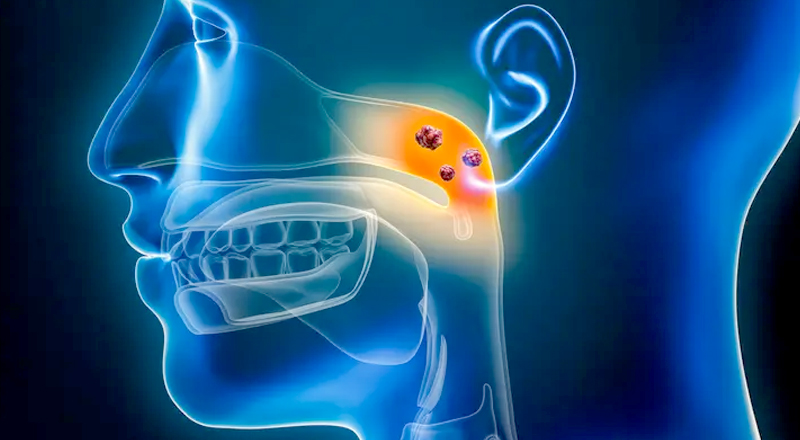
Nasopharyngeal (Upper Throat) Tumor Treatment
The nasopharynx is the uppermost part of the throat, located behind the nasal cavity and above the soft palate. Tumors arising in this region — most commonly nasopharyngeal carcinoma (NPC) — are distinct in their behavior, treatment, and outcomes compared to other head and neck cancers. Dr. Antony Raj James has specialized training in head and neck oncology and provides comprehensive surgical assessment and management for nasopharyngeal tumors as part of a multidisciplinary care team.
What is Nasopharyngeal Carcinoma (NPC)?
Nasopharyngeal carcinoma (NPC) is a malignant tumor arising from the epithelial lining of the nasopharynx. It has a strong association with Epstein-Barr virus (EBV) infection and is more prevalent in Southeast Asia, Southern China, and parts of Africa. NPC is classified into three WHO subtypes, with non-keratinizing NPC being the most common and the most responsive to radiation-based treatment.
Other Nasopharyngeal Tumors
In addition to carcinoma, other tumors may arise in or extend to the nasopharynx, including:
- Juvenile nasopharyngeal angiofibroma (JNA) – a benign but locally aggressive vascular tumor occurring predominantly in adolescent males.
- Lymphoma involving the nasopharynx.
- Minor salivary gland tumors of the nasopharyngeal mucosa.
- Extension of skull base or sinonasal tumors into the nasopharynx.
Presenting Symptoms
Nasopharyngeal tumors may present with nasal obstruction, epistaxis, hearing loss (due to Eustachian tube involvement and middle ear effusion), neck lump (from lymph node metastasis), or cranial nerve palsies in advanced disease with skull base extension.
Treatment of Nasopharyngeal Carcinoma
NPC is primarily treated with concurrent chemoradiotherapy (chemotherapy combined with radiotherapy), which is highly effective for locoregional disease due to the radiosensitive nature of most NPCs. Surgery plays a specific role in NPC management:
- Neck dissection – For patients with residual or recurrent lymph node disease in the neck following chemoradiotherapy.
- Salvage nasopharyngectomy – For carefully selected patients with local recurrence following definitive radiotherapy, when re-irradiation carries significant toxicity risk.
- Surgical biopsy – Endoscopic biopsy of the nasopharynx is performed for diagnosis and histological confirmation.
Treatment of Juvenile Nasopharyngeal Angiofibroma (JNA)
JNA is primarily managed with surgical resection, frequently preceded by pre-operative embolization to reduce intra-operative blood loss. Surgical approaches may be endoscopic, open, or combined depending on tumor extent.
Multidisciplinary Cancer Care
Nasopharyngeal carcinoma management requires close coordination between head and neck surgery, radiation oncology, and medical oncology. Dr. James participates in multidisciplinary tumour-board discussions to determine the optimal treatment strategy for each patient, integrating surgical and non-surgical modalities.
Why Choose Dr. Antony Raj James?
- Specialized Head & Neck Oncology Training – MCh in Head & Neck Oncology from Tata Memorial Hospital/ACTREC, Mumbai.
- Expertise in Nasopharyngeal Tumor Management – Surgical assessment, neck dissection, salvage surgery, and endoscopic biopsy for nasopharyngeal tumors.
- Multidisciplinary Approach – NPC managed through coordinated chemoradiotherapy and surgery as appropriate.
- Comprehensive Head & Neck Oncology Care – Integrated surgical and non-surgical management tailored to each patient's tumor characteristics.