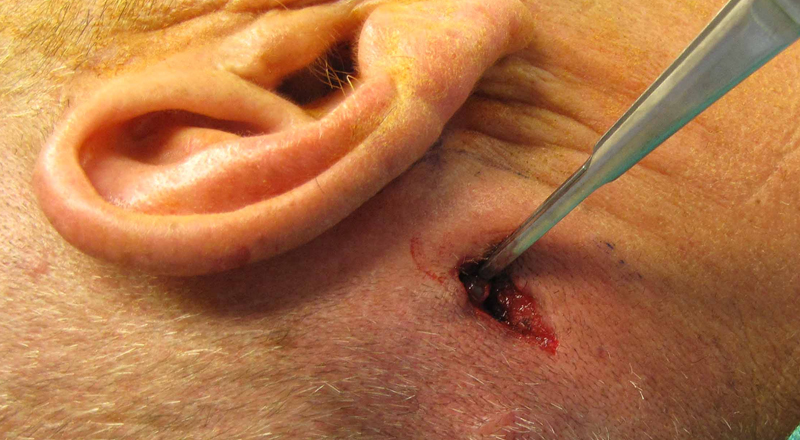
Sentinel Lymph Node Biopsy for Skin Cancers
Sentinel Lymph Node Biopsy (SLNB) is a minimally invasive staging procedure used to determine whether a skin cancer — most commonly melanoma or high-risk squamous cell carcinoma (SCC) — has spread to the regional lymph nodes. Dr. Antony Raj James has specialized training in head and neck oncology and experience performing sentinel lymph node biopsy in the complex lymphatic territory of the head and neck.
What is a Sentinel Lymph Node?
The sentinel lymph node is the first lymph node to which cancer cells from a primary tumor are most likely to drain. If the sentinel node is free of cancer, it is generally assumed that the remaining regional lymph nodes are also free of disease, potentially avoiding a more extensive lymph node dissection.
When is SLNB Recommended?
SLNB is considered in the following situations:
- Melanoma – Recommended for patients with primary melanomas of intermediate thickness (Breslow thickness ≥0.8 mm or ≥1 mm depending on guidelines) where the risk of occult nodal metastasis is clinically significant.
- High-risk Squamous Cell Carcinoma (SCC) – Considered in selected patients with high-risk features such as large tumors, deep invasion, or perineural spread where lymph node staging may influence treatment planning.
The SLNB Procedure
Sentinel lymph node biopsy involves the following steps:
- Pre-operative lymphoscintigraphy: A small amount of radioactive tracer is injected around the primary tumor site to map the lymphatic drainage and identify the sentinel node(s).
- Intra-operative identification: A blue dye and/or gamma probe is used during surgery to locate the sentinel node(s) in the neck or regional lymphatic basin.
- Selective removal: Only the identified sentinel node(s) are excised — not the entire lymph node group.
- Pathological analysis: The removed node is examined by a pathologist. If no cancer cells are found, no further lymph node surgery is typically required.
Significance of SLNB Results
A positive sentinel node (cancer detected) provides important staging information and guides decisions regarding completion lymph node dissection or adjuvant systemic therapy. A negative sentinel node generally indicates no regional spread and avoids the morbidity of full lymph node dissection.
Multidisciplinary Cancer Care
SLNB results directly influence subsequent treatment decisions including adjuvant immunotherapy, targeted therapy, or radiotherapy for skin cancers. Dr. James participates in multidisciplinary tumour-board discussions to integrate SLNB findings with medical oncology and radiation oncology recommendations.
Why Choose Dr. Antony Raj James?
- Specialized Head & Neck Oncology Training – MCh in Head & Neck Oncology from Tata Memorial Hospital/ACTREC, Mumbai.
- SLNB Expertise in the Head & Neck – Experience with the complex, variable lymphatic drainage patterns of the face and scalp.
- Minimally Invasive Staging – SLNB avoids full nodal dissection when the sentinel node is clear.
- Multidisciplinary Approach – SLNB findings are integrated into comprehensive cancer treatment planning.