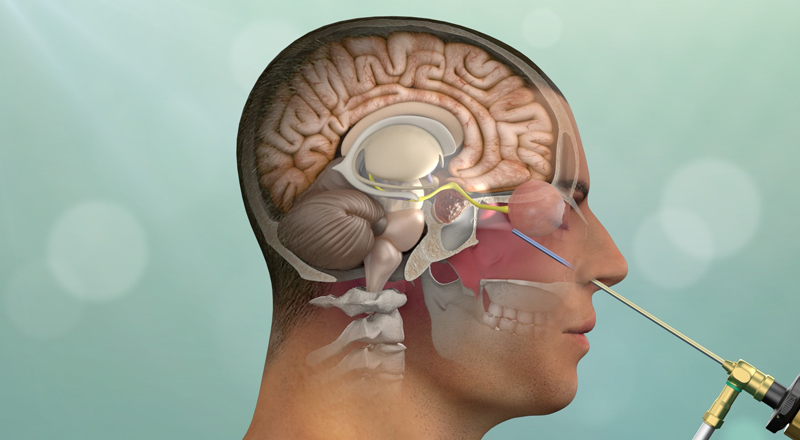
Skull Base Tumor Surgery
The skull base is the complex bony floor of the cranial cavity that separates the brain from the structures of the face and neck. Tumors arising at or extending to the skull base present unique surgical challenges due to the proximity of critical neurovascular structures. Dr. Antony Raj James has specialized training in head and neck oncology and experience in the surgical management of skull base tumors from a head and neck surgery perspective, working within multidisciplinary teams that include neurosurgery where required.
Types of Skull Base Tumors
Tumors involving the skull base may include:
- Primary malignant tumors – Squamous cell carcinoma, adenoid cystic carcinoma, chordoma, chondrosarcoma, and esthesioneuroblastoma with skull base extension.
- Benign tumors – Meningioma, paraganglioma (glomus jugulare, carotid body tumor), juvenile nasopharyngeal angiofibroma, and fibrous dysplasia.
- Secondary involvement – Advanced head and neck cancers (sinonasal, nasopharyngeal, parotid, temporal bone) extending to involve the skull base.
Anterior Skull Base Surgery
Anterior skull base surgery, including craniofacial resection, is used for tumors of the nasal cavity, paranasal sinuses, and orbit that extend superiorly to involve the anterior cranial fossa. This approach involves collaboration between head and neck surgery and neurosurgery to achieve safe resection with appropriate margins.
Lateral Skull Base Surgery
Lateral skull base procedures address tumors involving the temporal bone, jugular foramen, and infratemporal fossa. These may include paragangliomas, temporal bone malignancies, and parotid tumors with deep extension. Careful identification and management of the facial nerve, lower cranial nerves, internal carotid artery, and jugular vein are essential in lateral skull base surgery.
Surgical Planning and Multidisciplinary Collaboration
Skull base surgery requires careful pre-operative planning with cross-sectional imaging (CT and MRI) and angiography where indicated. Complex cases are discussed within a multidisciplinary team including neurosurgery, neuroradiology, radiation oncology, and medical oncology to determine the optimal combined approach for each patient.
Reconstruction After Skull Base Surgery
Reconstruction following skull base resection aims to separate the intracranial compartment from the aerodigestive tract, prevent CSF leak, and restore the facial skeleton and soft tissue envelope. Options include pedicled flaps (pericranial, temporoparietal, or nasoseptal) and microvascular free flap reconstruction for larger defects.
Why Choose Dr. Antony Raj James?
- Specialized Head & Neck Oncology Training – MCh in Head & Neck Oncology from Tata Memorial Hospital/ACTREC, Mumbai.
- Skull Base Surgery Expertise – Experience in anterior and lateral skull base resections from a head and neck surgery perspective.
- Multidisciplinary Collaboration – Complex skull base cases managed in coordination with neurosurgery, neuroradiology, and oncology teams.
- Reconstructive Expertise – Pedicled and microvascular reconstruction to restore integrity following skull base surgery.