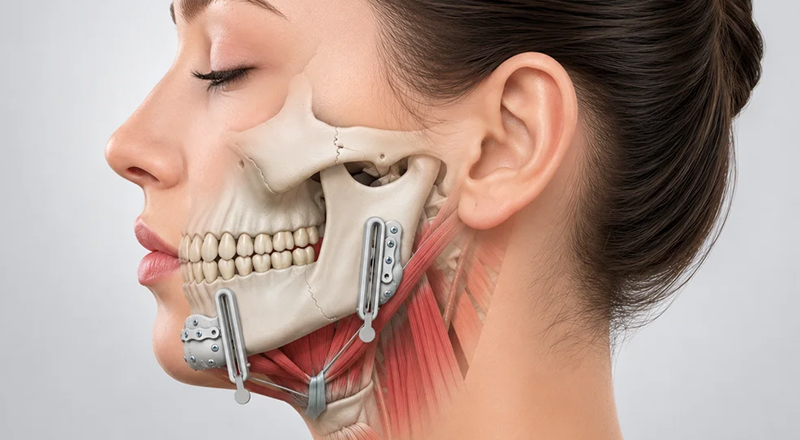
Jaw Bone Cancer Surgery with Reconstruction (Mandibulectomy)
Mandibulectomy is a surgical procedure to remove all or part of the lower jaw bone (mandible) affected by cancer, followed by reconstruction to restore jaw function and facial form. Dr. Antony Raj James has specialized training in head and neck oncology and extensive experience in complex jaw cancer surgery and reconstruction.
What is Mandibulectomy?
A mandibulectomy involves the surgical removal of a segment or the entire lower jawbone when it is directly involved by cancer or when tumor clearance requires bone resection. There are two main types:
- Marginal (Rim) Mandibulectomy – Removal of the upper border of the jawbone while preserving the continuity and structural integrity of the mandible. Used when tumor abuts but does not deeply invade the bone.
- Segmental Mandibulectomy – Removal of a full-thickness segment of the mandible when there is cortical bone erosion or medullary involvement by cancer. Requires reconstruction to restore jaw continuity.
When is Mandibulectomy Recommended?
Surgery is considered when oral cavity cancers — such as those of the gum (gingiva), floor of mouth, cheek lining, or tongue — involve or are in close proximity to the mandible. Imaging assessment and tumour-board review guide surgical planning. The extent of bone resection is determined by tumor involvement and the requirement to achieve adequate surgical margins.
Surgical Approach
Dr. James has experience in complex oral cavity resections including T4 compartmental clearance and procedures involving the mandible. Surgery is planned to achieve appropriate oncological clearance while considering the need for functional and cosmetic reconstruction. The approach may be transoral, transcervical, or combined, depending on tumor location and extent.
Neck Dissection When Required
Jaw and oral cavity cancers frequently require simultaneous evaluation and treatment of regional lymph nodes. Dr. James has extensive experience with radical, comprehensive, and selective neck dissections across levels I–V, performed concurrently with mandibulectomy when indicated.
Reconstruction After Mandibulectomy
Reconstruction after jaw resection is essential to restore chewing, swallowing, speech, and facial appearance. Dr. James has experience with pedicled reconstructive flaps, including PMMC and other regional flaps, used to reconstruct soft tissue defects following mandibulectomy. Reconstruction planning is individualized based on the extent of the defect and the patient's overall treatment requirements.
Multidisciplinary Cancer Care
Jaw bone cancers require coordinated care involving head and neck surgery, radiation oncology, medical oncology, maxillofacial surgery, and pathology teams. Dr. James participates in multidisciplinary tumour-board discussions to develop individualized, evidence-based treatment plans for each patient.
Why Choose Dr. Antony Raj James?
- Specialized Head & Neck Oncology Training – MCh in Head & Neck Oncology from Tata Memorial Hospital/ACTREC, Mumbai.
- Extensive Oral Cancer Surgery Experience – 400+ oral cavity resections as primary surgeon, including complex jaw cancer cases.
- Reconstructive Expertise – Experience with pedicled flaps for functional and cosmetic restoration after mandibulectomy.
- Multidisciplinary Approach – Complex cases are evaluated through coordinated tumour-board discussions and evidence-based treatment planning.